
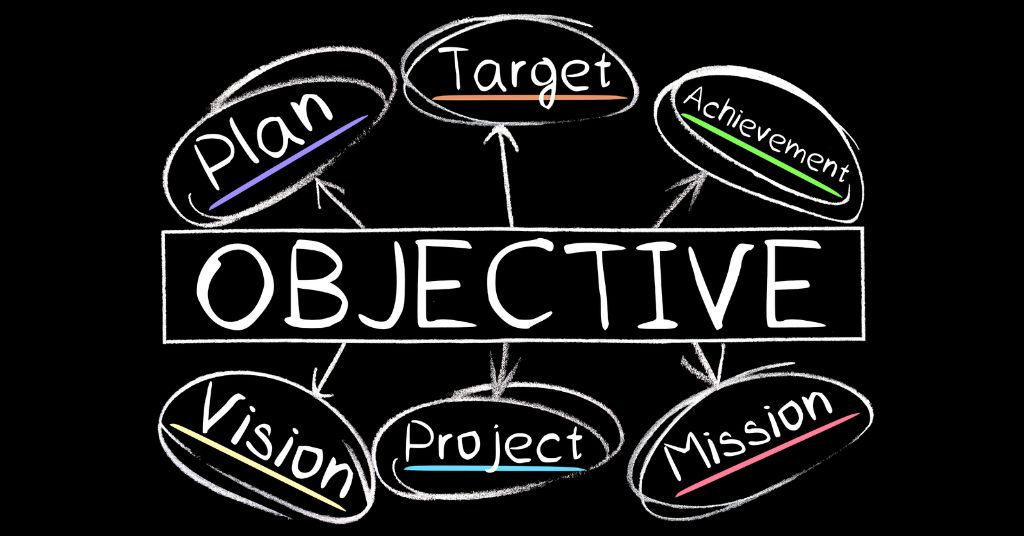
Marketing objectives are specific and measurable statements that are aligned with the organization’s mission, objectives, and overall goals. Typical marketing objectives focus on increasing brand awareness, sales, market share, entering new markets, or driving sales through specific channels. Organizational tactics, strategies, and objectives should be well researched and outlined in a marketing plan — vital components within this include:
Situational Analysis
A basic four-quadrant framework, a SWOT Analysis defines factors that the organization both can and cannot control and should include legal and ethical issues. This planning technique can be used for a project, a specific product/service, or the organization as a whole, and includes:
- Strengths (internal factors)
- Weaknesses (internal factors)
- Opportunities (external factors)
- Threats (external factors)
Your SWOT Analysis should be used to help inform and support your strategies to reach your objectives.
Target Audience
Marketing objectives need to target a specific audience to be effective. The best way to achieve this is to create a buyer persona for your product/service. This is a semi-fictional representation of your ideal customer based on real data and research (Express, 2023) that you will use to identify opportunities to reach your ideal segment. To create a comprehensive buyer profile, obtain geographic, demographic, and psychographic characteristic data.
Marketing Mix
The four P’s of your marketing mix outline how you will market to your audience to reach your objectives. The four P’s will change as a brand’s life cycle stages evolve, and include:
- Product: what you are selling
- Price: the cost you will sell it for
- Place: where it will be distributed
- Promotion: how you will communicate it to your desired audience
Goals
A goal supports the product, service, or business objectives and is simple by itself but is an important element to the overall marketing objectives. Common goals include:
- Increase sales
- Expand to a new market
- Launch a complimentary product
- Build brand awareness
- Reach a new audience
Strategy & Tactics
A strategy is a broad-based, high-level approach and a tactic is a specific action or method used to implement a strategy (Moore, 2024) — combined, they (or several of them) will be used to achieve the overall objective. One example of a strategy and tactic could be: Drive traffic to our free e-book download landing page to increase the size of our email list (S), by purchasing paid social media ads targeting our primary demographic that direct users to our e-book page (T).
Marketing Objectives
The SMART framework should be used to bring structure and clarity to goals within your overall marketing objectives. This methodology includes (UAGC, 2024):
- Specific: a well-defined goal, not vague
- Measurable: the criteria for measuring the change
- Achievable: the goal is feasible
- Relevant: the task relates to the larger objectives
- Time-bound: the time frame for the goal to be achieved
An example of a SMART goal could be: Raise brand awareness (R) by increasing Instagram follower count (S) by 5% (M,A) by the end of Q2 this year (T). This well-defined goal is specific (not too vague), achievable (not unfeasible) and relevant to organizational goals. When setting the M and T, be sure to define benchmark data that will determine the metrics you need to reach to achieve the goal.
By using the above methods to define your marketing objectives, you will be off to a strong start to create marketing tactics and strategies that align with the organization’s mission, objectives, and overall goals.
References
Express, A. (2023, November 14). How to create a buyer persona in four steps (+ free templates & examples). www.adobe.com. https://www.adobe.com/express/learn/blog/buyer-persona
Moore, S. (2024, January 25). Marketing Communications | 10 Components You Need In Your Marketing Plan. Marketingcommunications.wvu.edu. https://marketingcommunications.wvu.edu/professional-development/marketing-communications-today/marketing-communications-today-blog/2024/01/25/10-components-you-need-in-your-marketing-plan
UAGC. (2024, September 16). What Are SMART Goals? | UAGC. UAGC. https://www.uagc.edu/blog/what-are-smart-goals